A couple weeks ago we visited my flower gardens. May I now introduce you to the vegetable garden?
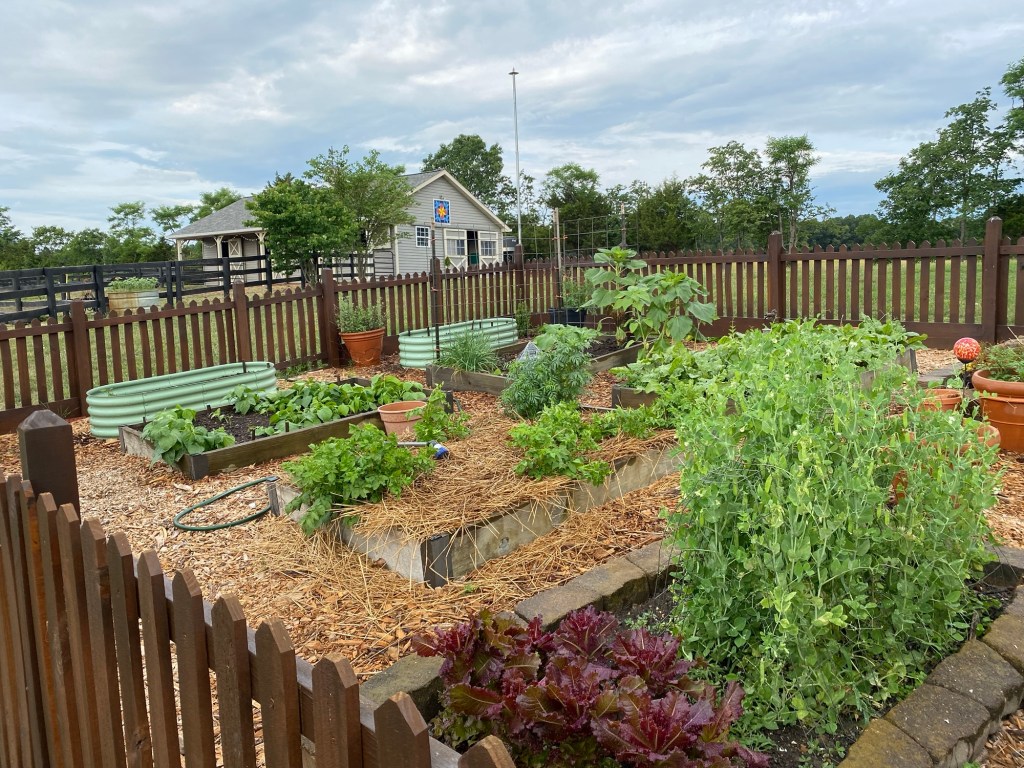
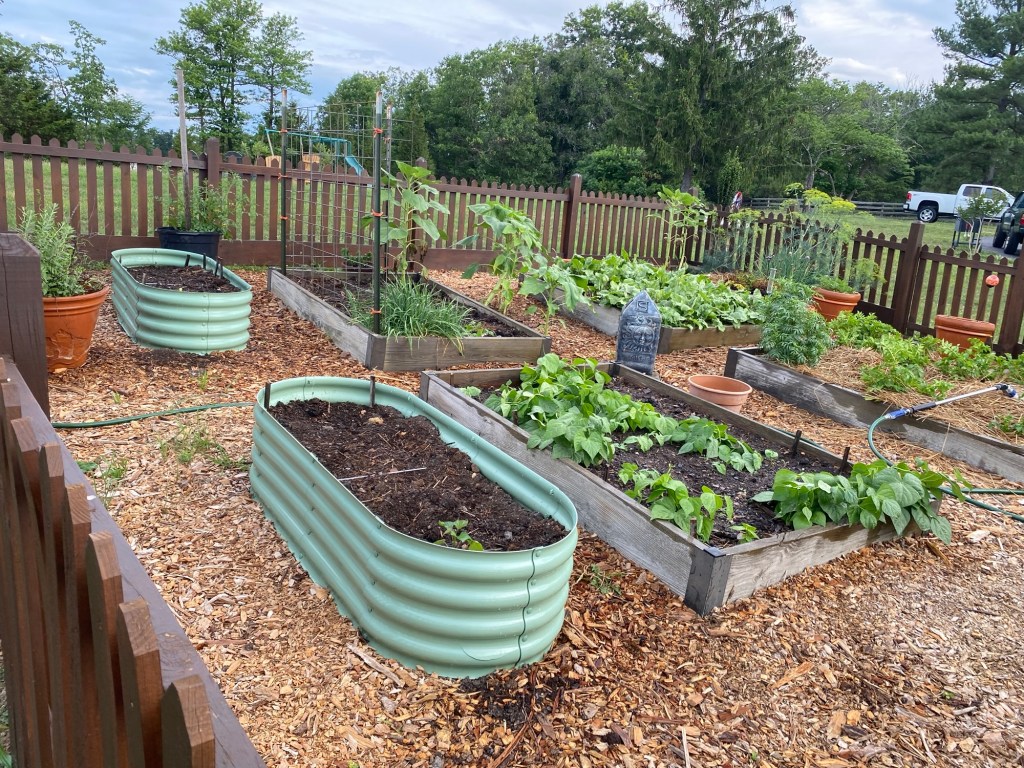
It is a small, little garden that suits us perfectly. It is all my husband & I need with some extra to share as well.
Bills dad was an amazing gardener. He grew much, and Polly, Bills mom, canned a goodly amount of food. His garden fed our family as well. He also grew enough for me to can tomatoes and beets. It was wonderful. I used to tell Grandad his garden should be featured in a Southern Living magazine. He taught me much.
I have noticed over these many years fewer and fewer vegetable gardens around our Valley homes. Three of our five children grow vegetables. They all are good gardeners. We have much to talk about around our growing seasons.
Sometimes I wonder if all the varieties of foods available in grocery store have spoiled our taste for the ordinary garden veggies? I have seriously been asked before how to cook fresh green beans.
Nothing, seriously nothing, from a grocery store tastes as good as homegrown. Don’t believe me? Plant a tomato, care for it, watch it grow and produce the best tasting tomatos you have ever eaten. It is likely you will never buy store-bought again.
Here is a neat thought: you grow tomatoes, ask your neighbor to container grow some green beans. Exchange your produce!
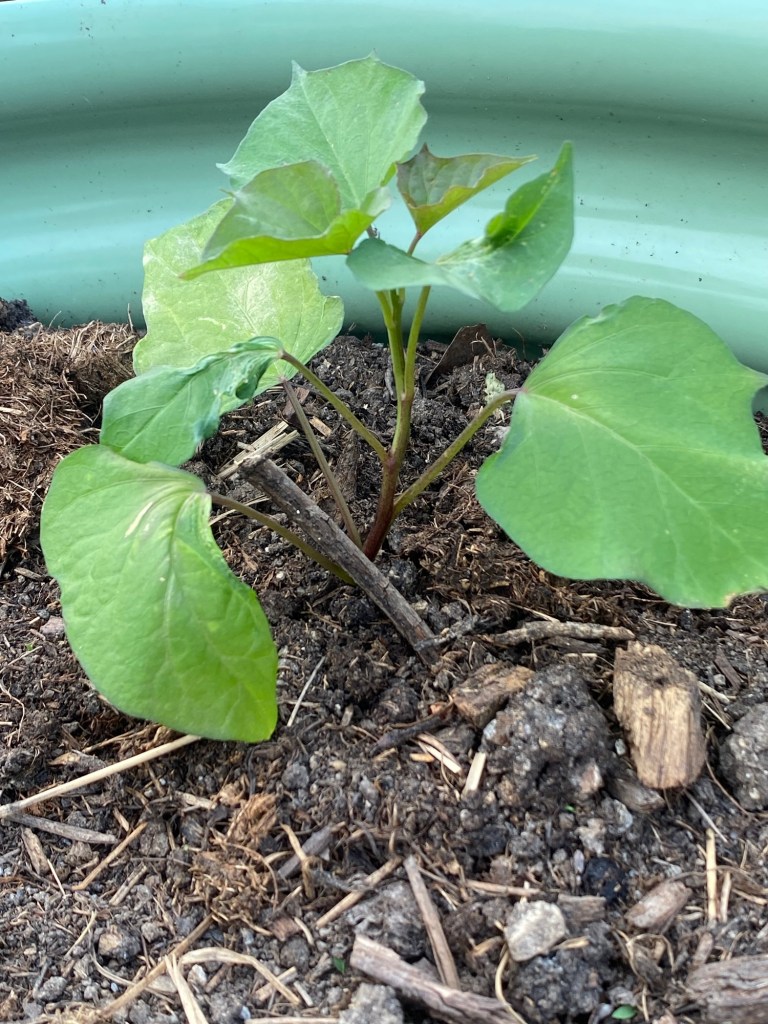
I grow lots of food for ‘free’. How? I plant potatoes that are sprouting in the pantry. I grow slips of sweet potatoes from those I have purchased at store. I let lettuce, dill, marigolds, and zinnias go to seed in the garden. They come up ‘volunteer’ next season. I save seeds from peas, beans, and limas.
Producing one’s own food is satisfying, great exercise, and gives one a good reason to talk to the neighbor! Working with the soil and nature–a beautiful art form.
Now, shall we take a stroll through my garden?
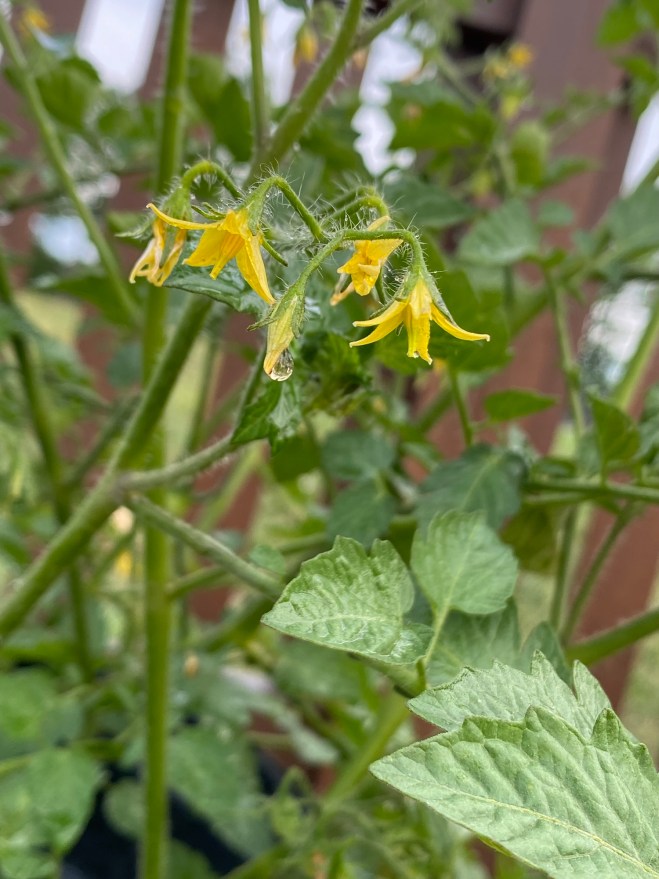
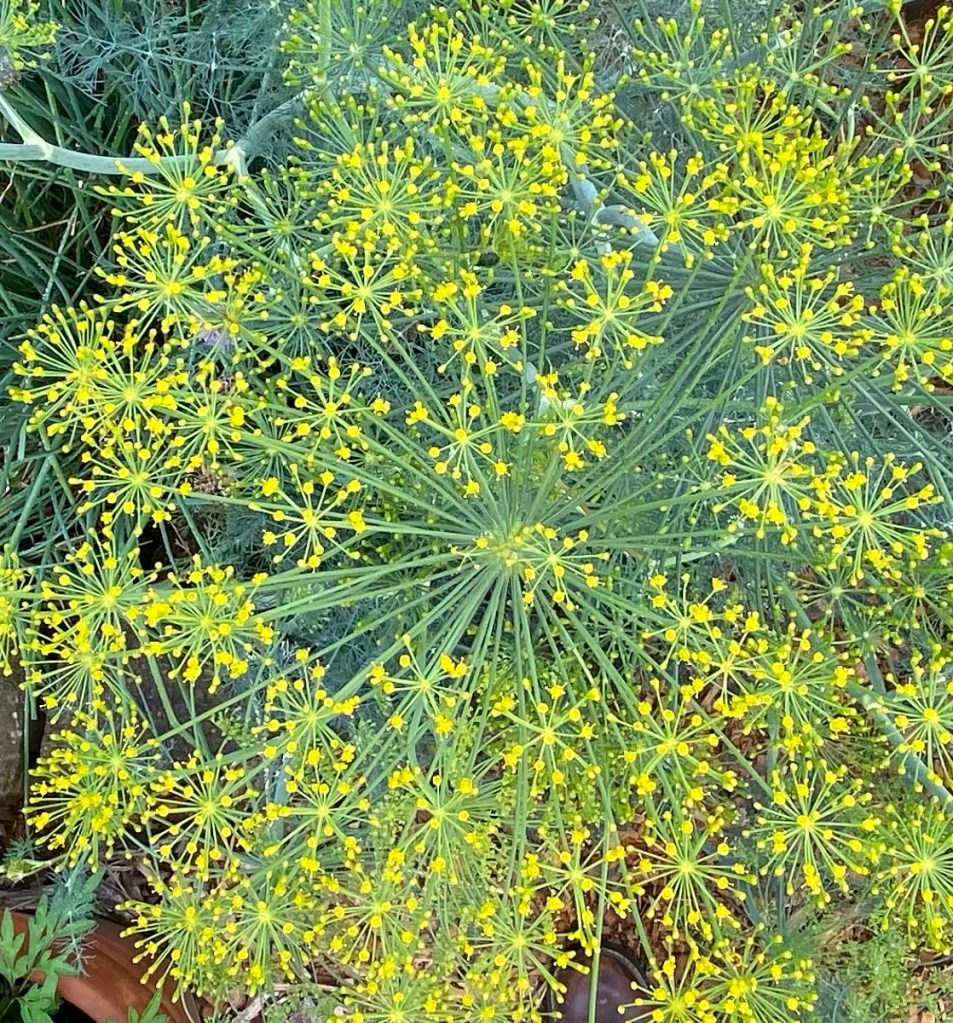
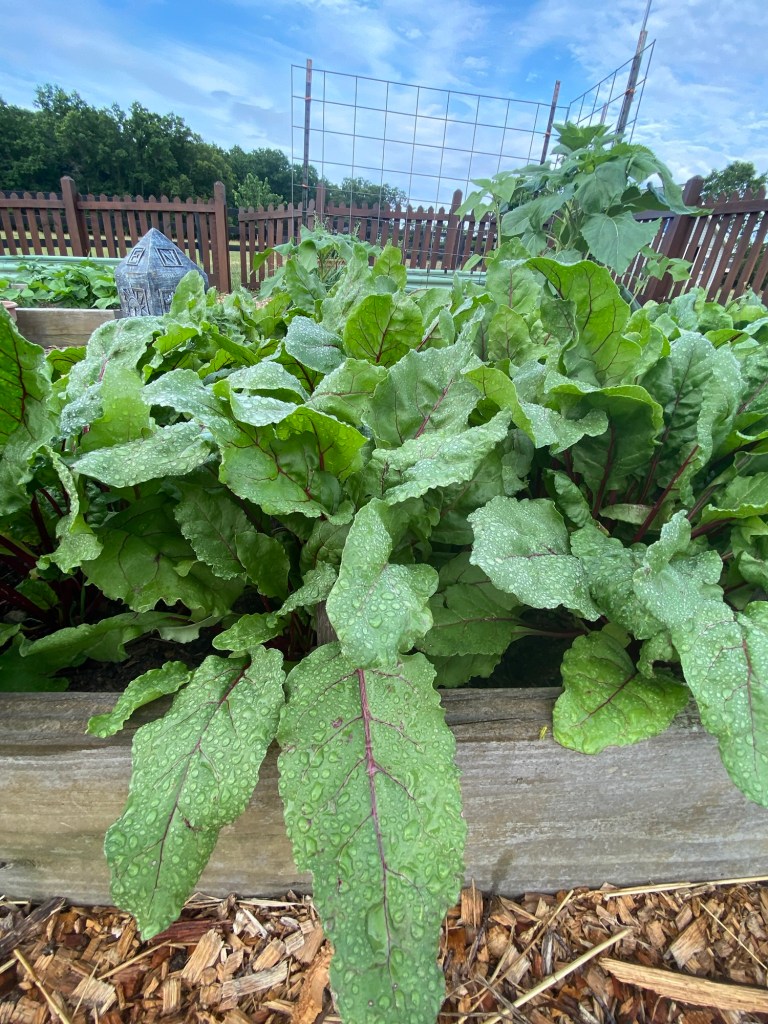
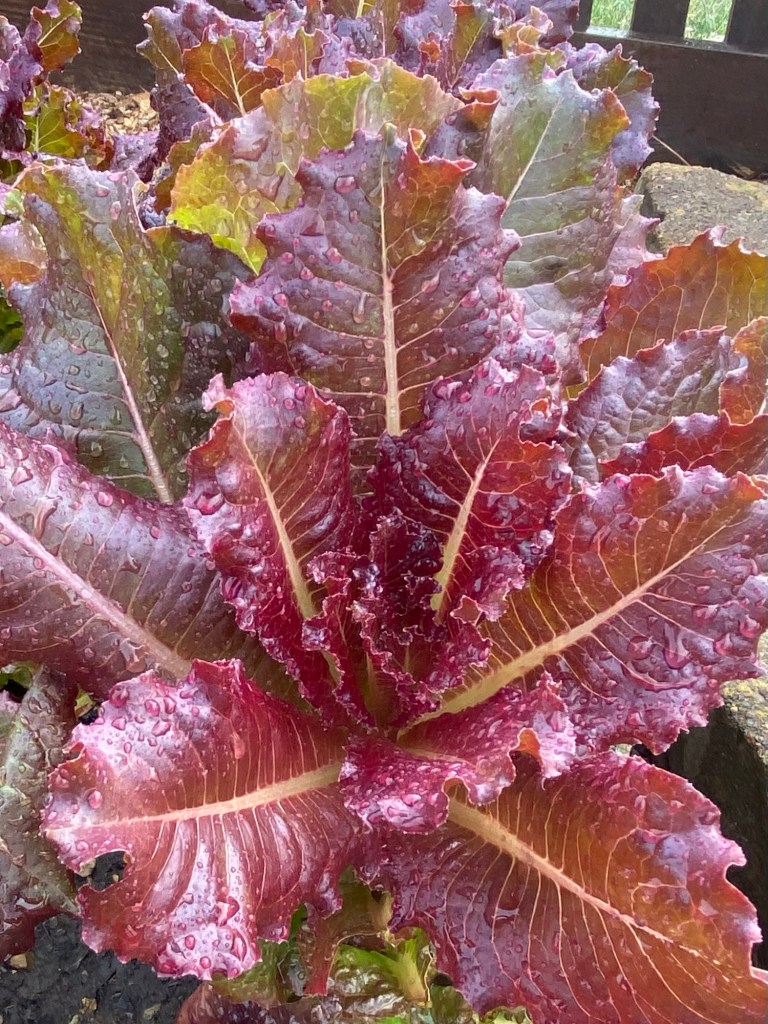
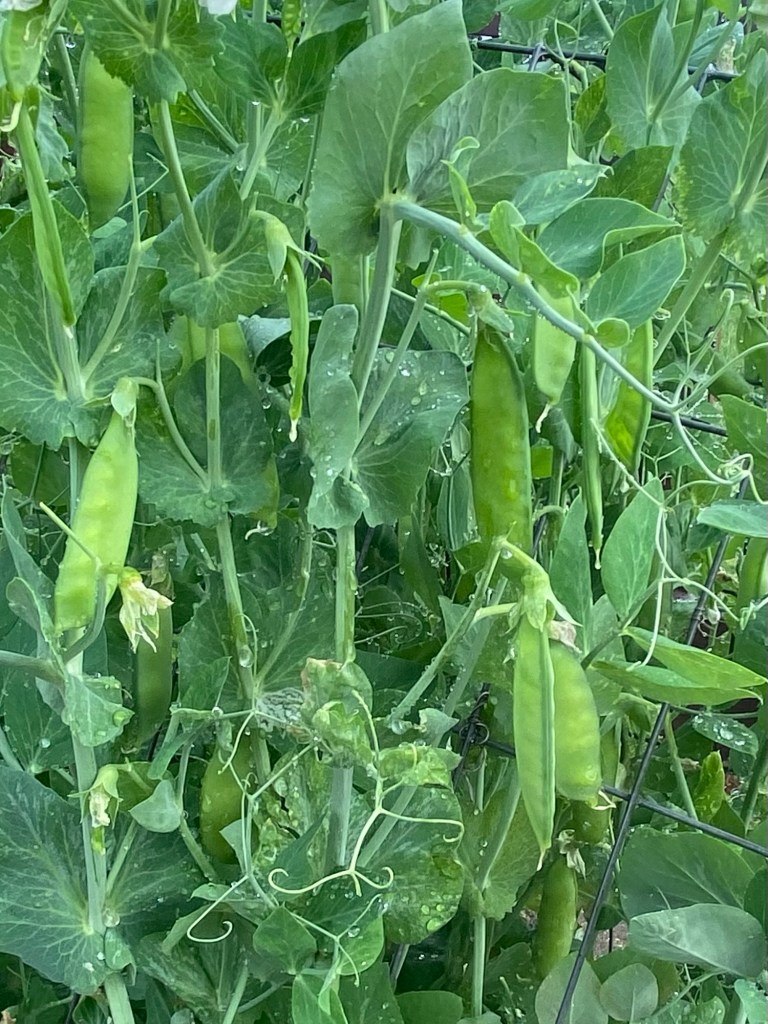
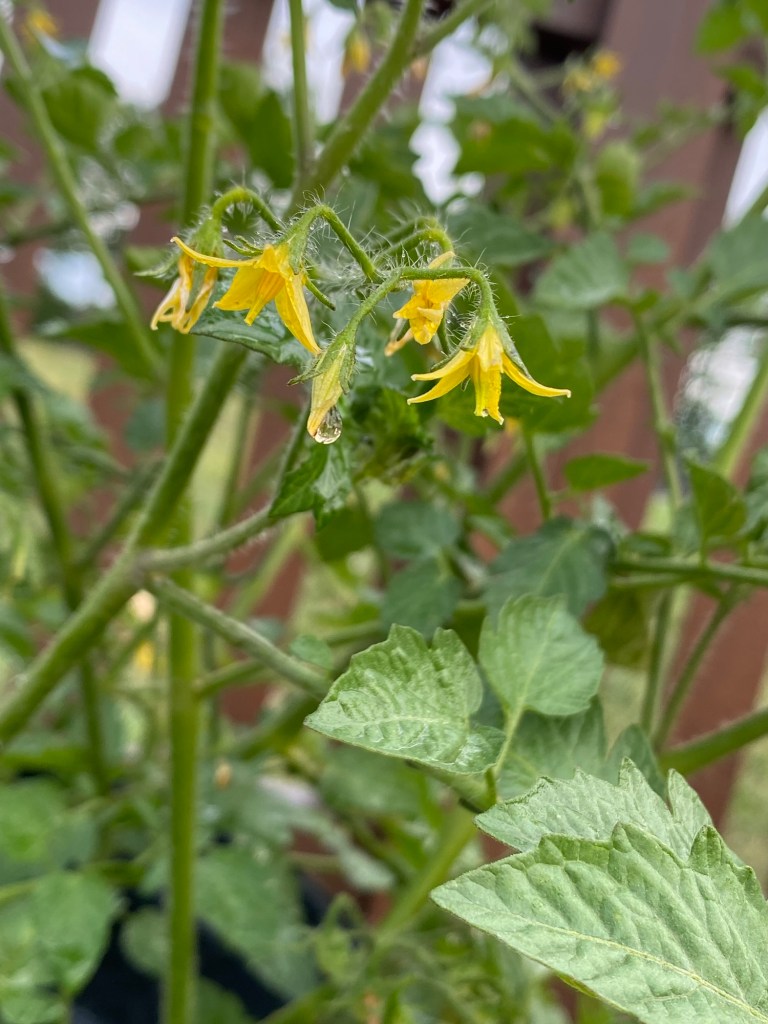
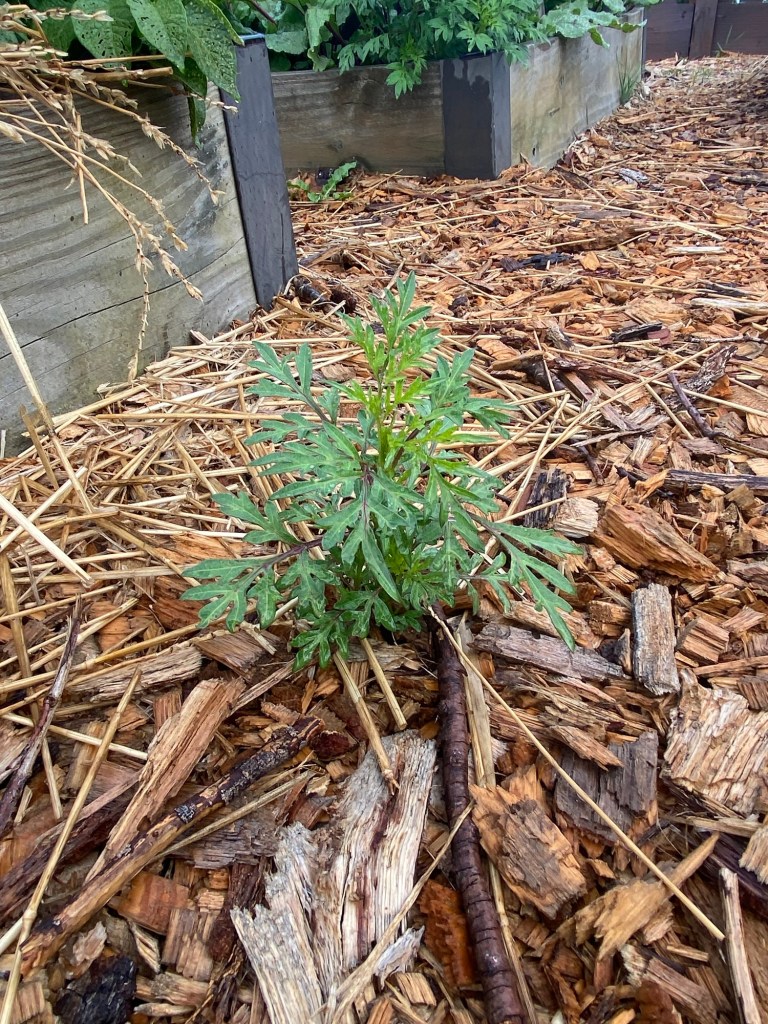
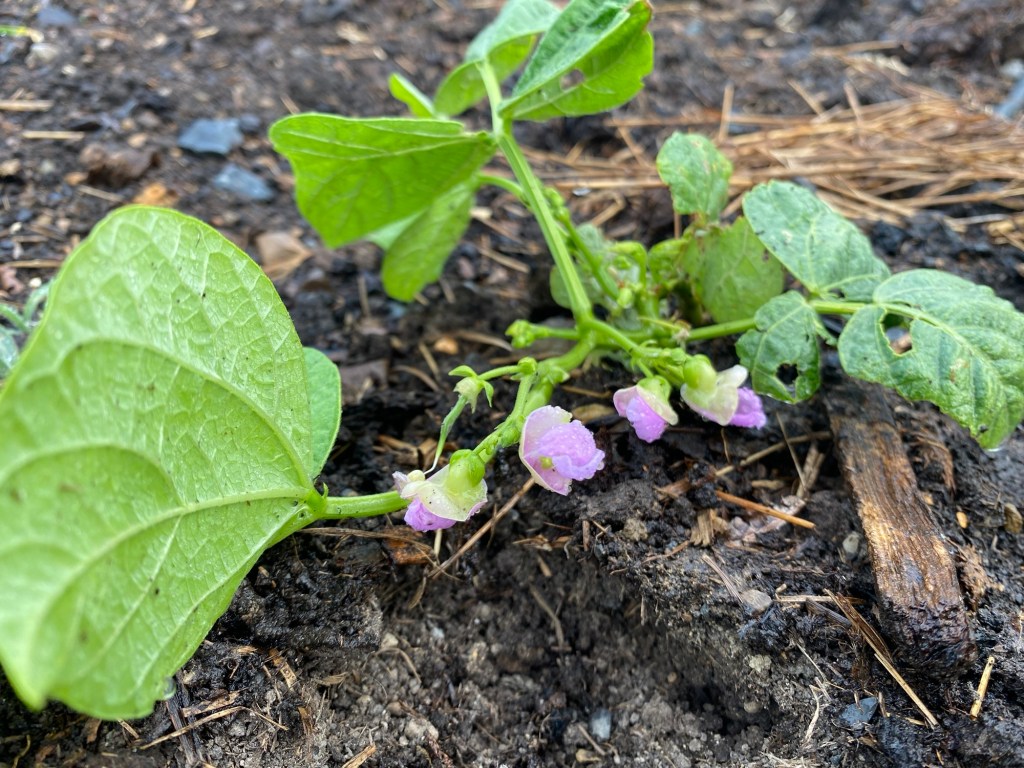
It is the perfect size for us.Wood chips between the beds are free or cost nominally. Contact your local tree guy.Volunteer dill from last year.Just watered beets. The best ever!Lettuce grown from last years gone to seed. Delicious!Peas from saved seeds last year.Soon to be a delicious tomato. This plant is a volunteer.Volunteer marigolds grow all around the garden.Sweet potato slips I started from the potato itself.Volunteer green bean. Beautiful purple flower!
Thank you for joining me. What is growing in your garden?
“We deliver everything but babies”. If this is not the motto of the trucking industry, perhaps it should be. Indeed, this industry keeps the world moving.
Here in the Shenandoah Valley, we locals love to complain about the number of trucks traveling on I81. What would happen, though, if the trucks stopped? Even for just a few days? Ever notice how quickly food sells out of grocery stores with the announcement of snow over the radio? It does not take long. How long could anyone last in regards to food supplies should trucks not run?
These are questions worthy of some thought. Not to cause a panic, but rather to elicit the thoughts of a ‘plan B’ should our food supply deliveries suddenly, for whatever reason, come to a halt.
Canning our own food. What? Whoever does that anymore? How in the world does anyone do it? Oh! Only the hillbillies can their own food anymore. It is not sophisticated enough for us. We have risen above that silliness and hard work. One might get sweaty and dirty. Right? Suppose that depends on ones point of view. We all still need and like to eat. Funny thing is, very few folks like to cook, much less grow their own food. That is far too much effort and hard work. Who has time for that anyway?
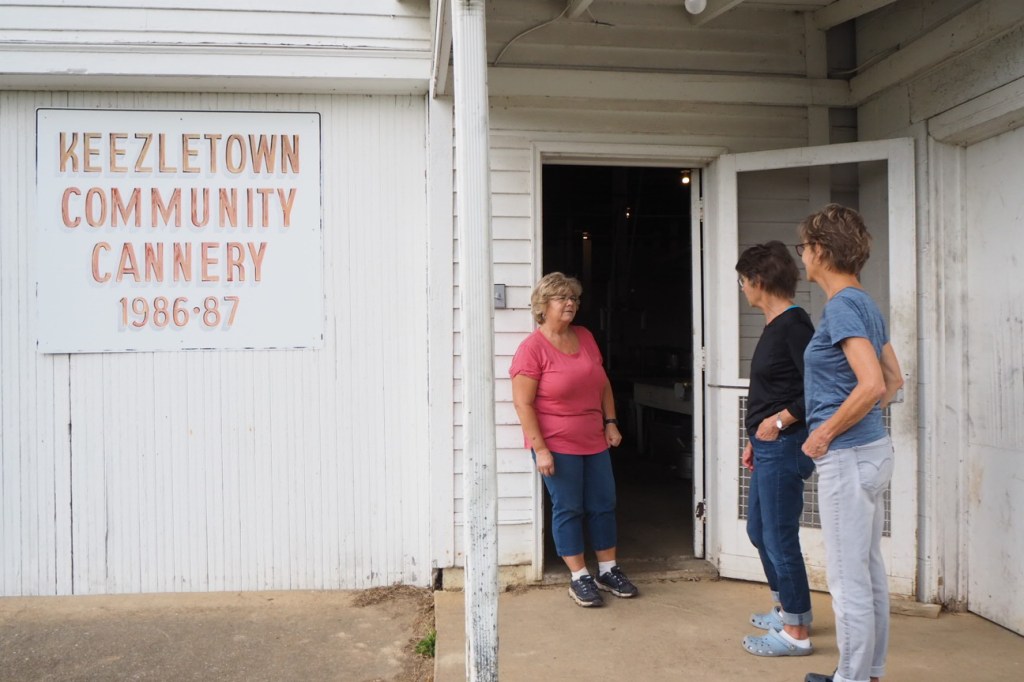
The Keezeltown Community Canner could help with many of these questions. I say ‘could’ because it is due to close this November—for good.
So come take a peek inside and see why it would be sad to have this community cannery close its doors.
This community cannery is a plus for folks in the area for many reasons. Come take a peek inside and see why.
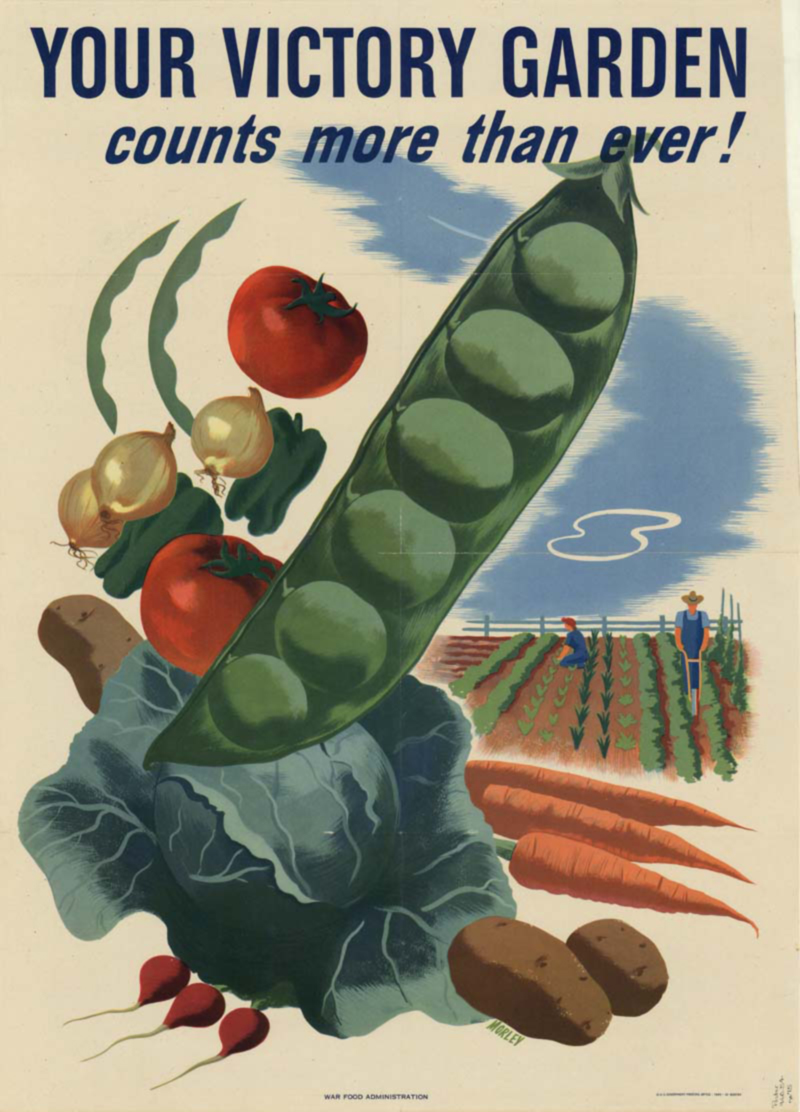
Victory Gardens. Isn’t that a wonderfully invigorating name? Ever heard of them? They found their beginning during WWI to aid in the war effort. Commercial food was shipped in great quantities to feed the soldiers. Farms had been turned into battlefields. Farm workers were recruited into military service causing food to be in short supply. Our government encouraged we citizens to grow food to assist in the war effort. A school program was even initiated by the federal Bureau of Education to encourage children to enlist as “soldiers of the soil”. It was called the U.S. School Garden Army (USSGA).
The results were huge. In 1918 an approximate 1.45 million quarts of canned fruits and vegetables were generated. The canned food was shipped overseas, and the extra was put up for our own supplies here at home. Smart, effective and proactive. It was the patriotic thing to do. By the end of WWI many folks had stopped gardening though.
The onset of WWII however brought on a renewed interest in the victory gardens. Food rationing began in the spring of 1942. This caused an even greater interest in gardening. Again, it was very successful. These gardens promoted patriotism, boosted morale, and provided protection from food shortages. The year 1942 saw an estimated 15 million families gardening. By the time 1944 came around, victory gardens had grown to around 20 million. This provided over 40% of the fresh fruits and vegetables consumed in the US. This amounted to roughly 8 million tons of food. Is this not amazing?
A Victory Garden was even planted on the White House lawn by Eleanor Roosevelt!
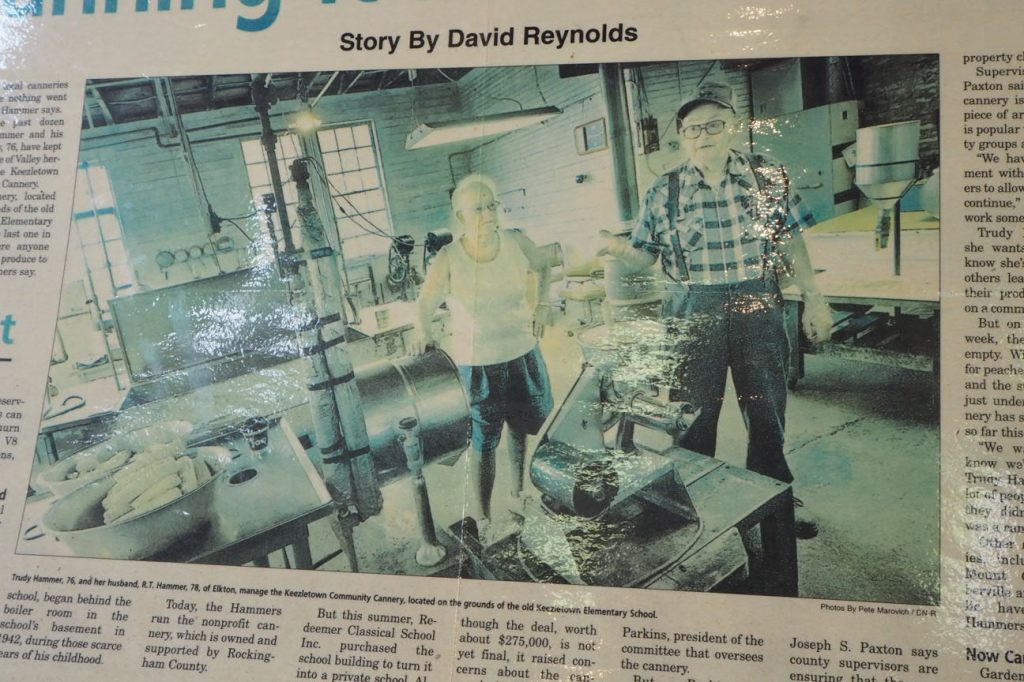
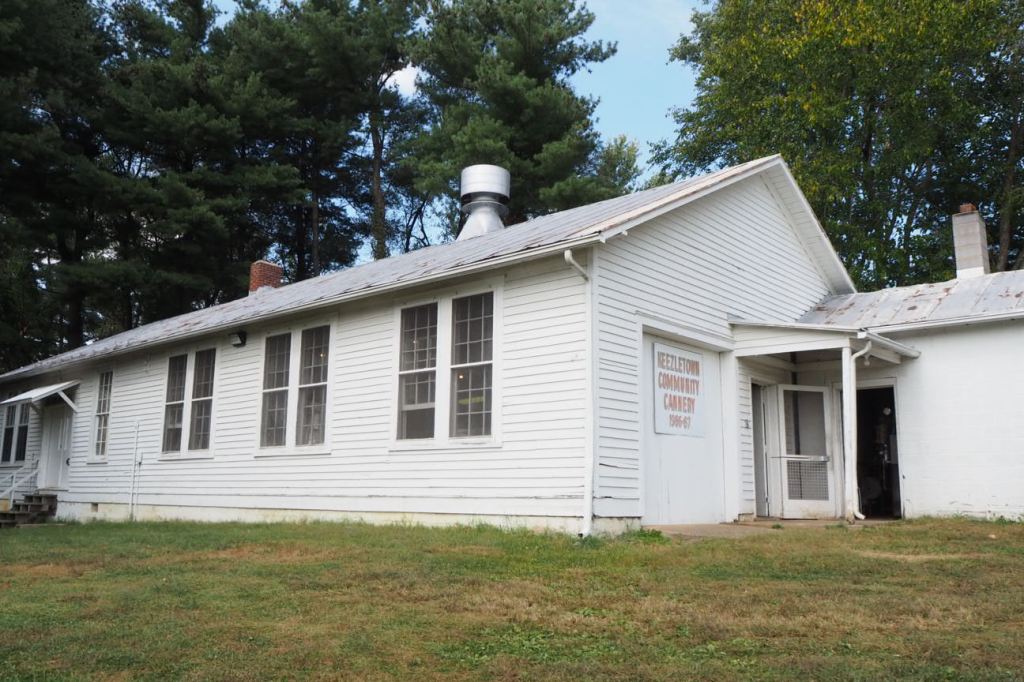
The Keezletown Cannery began in 1942 in the basement of Keezletown School. It has been operating every since. It is one of the oldest in Virginia.
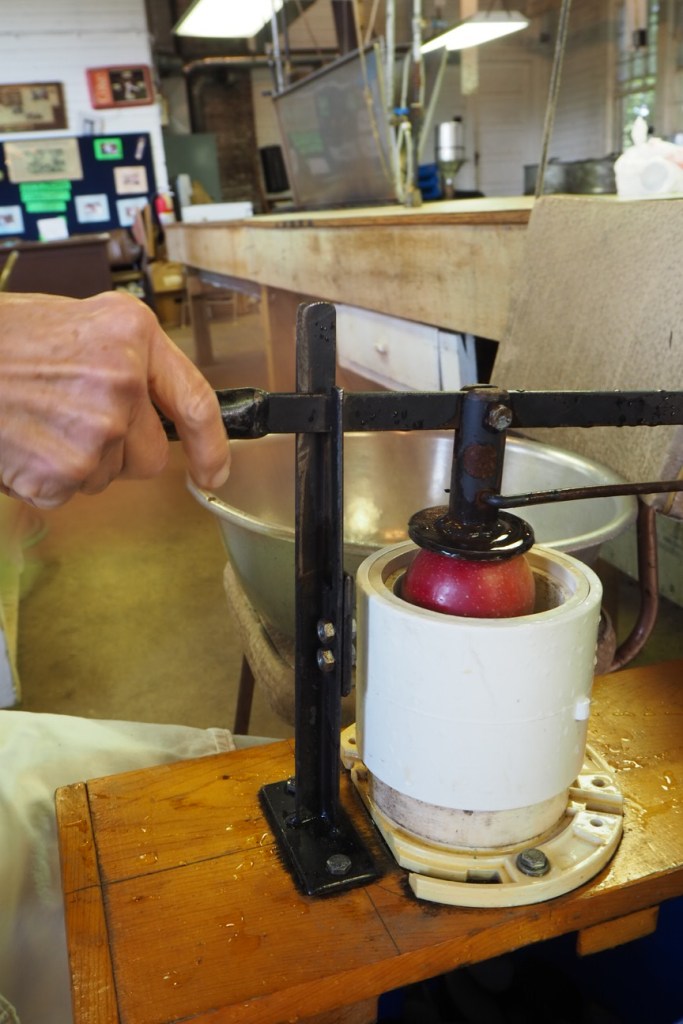
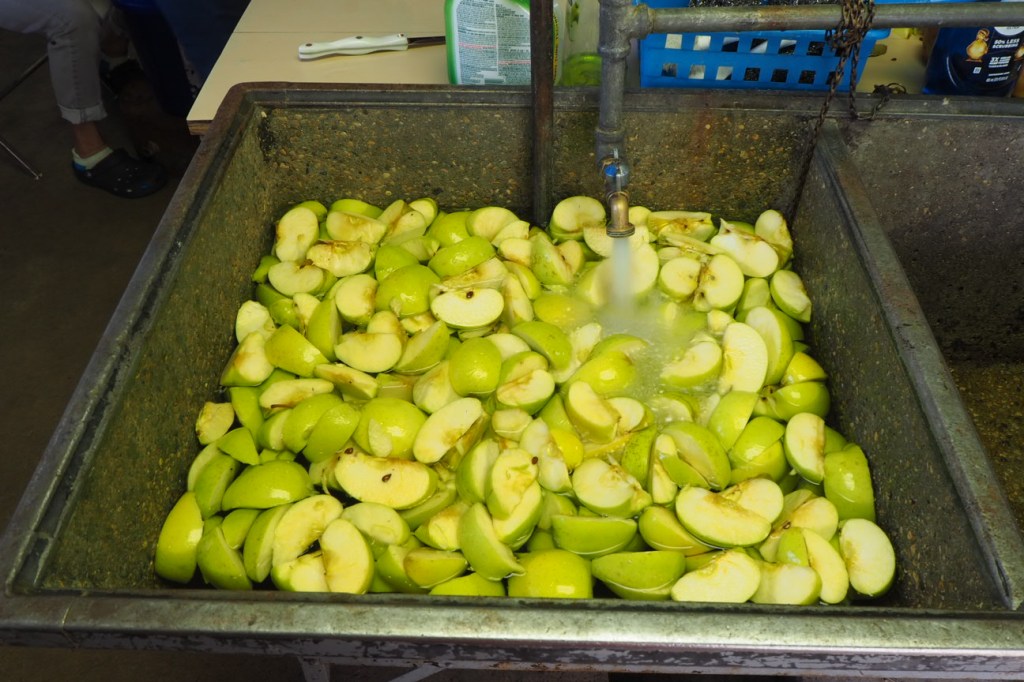
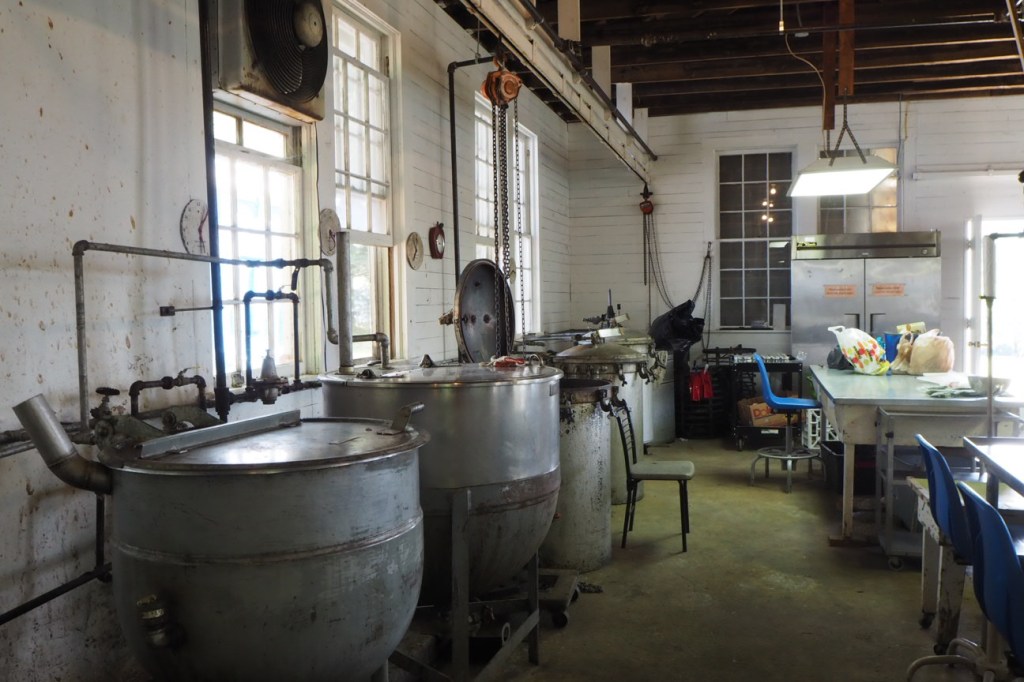
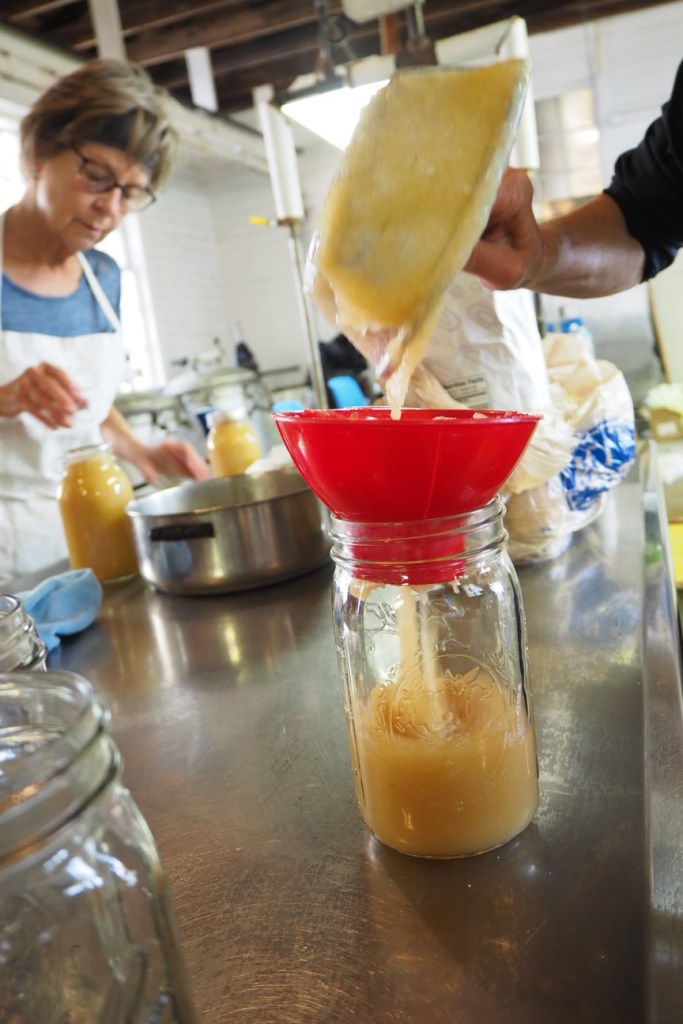
The cannery makes fast work of putting up food supplies because everything is there, except the food.Innovative tools have been created to make the process even more efficient and fast. RT Hammer made this clever and fast apple slicing tool. This amount of canning cannot be done in a private home. There simply is not enough space or equipment.
Three bushels of apples cannot be canned at homein a manner of hours like at the cannery.
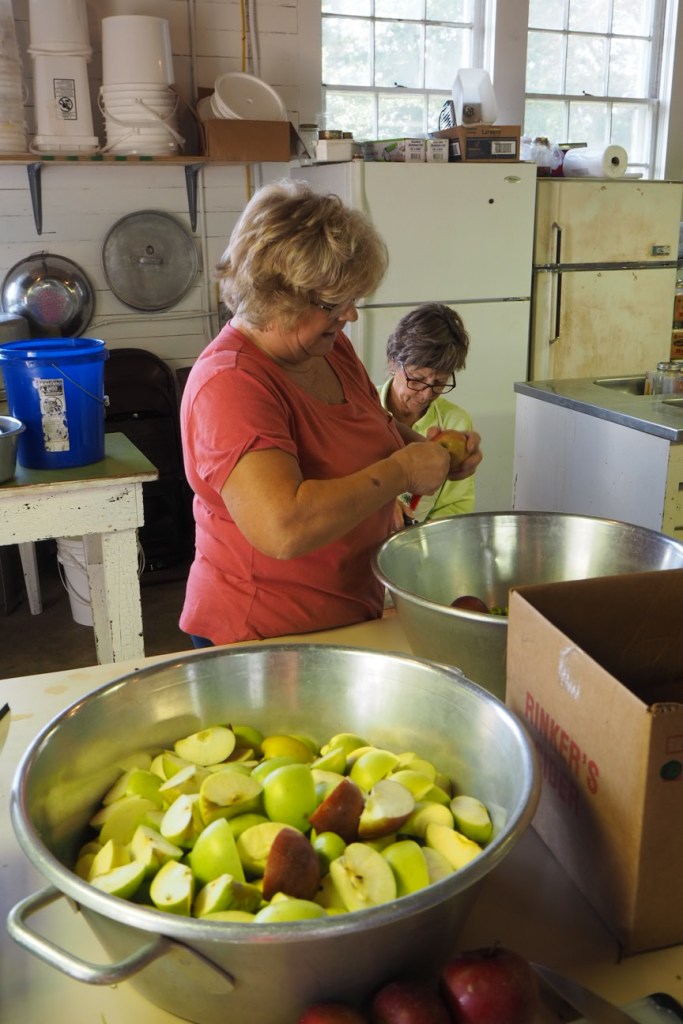
Many hands make light work. SandraHammer, who now operates the cannery, is always helpful.
RT and Trudy Hammer ran the cannery for seventeen years. Sandra Hammer runs it now. The wall behind the desk has several interesting articles about the cannery.Sandra Hammer with my sister, Kay. Sandra has been at the cannery for fourteen years, the last three she has run it alone. She also bears all the expenses of runningit.
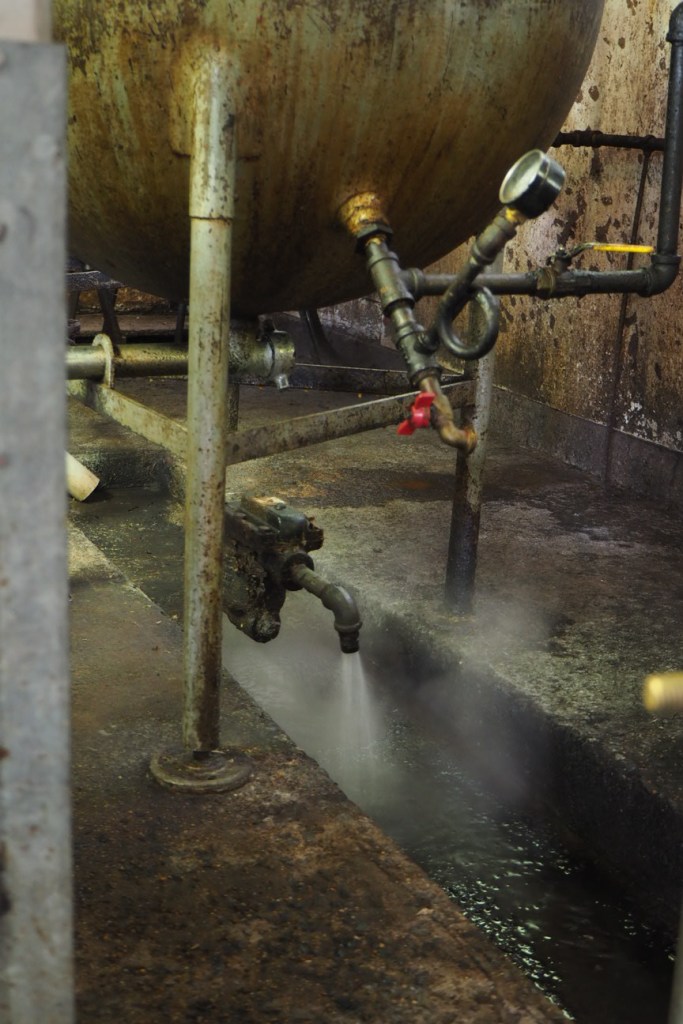
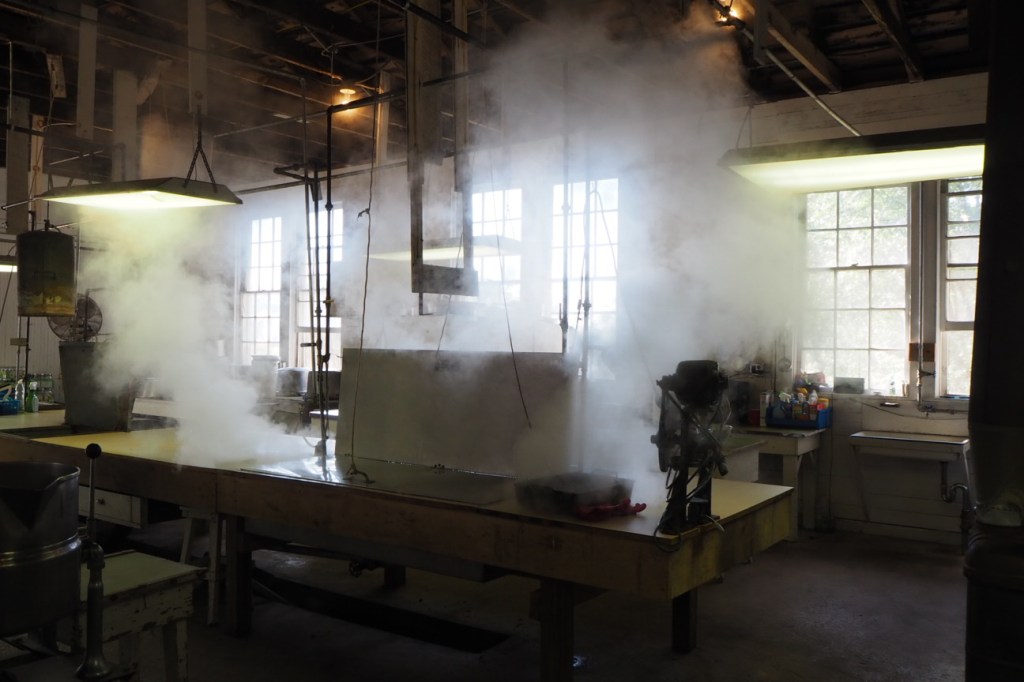
What newbies do not know about canning, Sandra can answer. She is adept with the entire process. It is all run by steam and pressure. It is an amazing, efficient process.
When the pressure lets off,
it makes quite a sound!
It is something to experience!
This past week I canned one bushel of apples at my house alone. It took seven and one half hours! In October, my sisters and I canned threeand a half bushels of apples in five hours. It is amazing the amount of food that is able to be processed at this cannery.
Home-canned lard. Neato!
This cannery serves as a way for non-profits to make money as well. Many a pint of apple butter have been processed by local churches to sell for fund raising every fall in this richly historic building.
There is so much to learn about food, physics, machinery, timing, providing for oneself , and of course canning food inside the walls of thiscool shop.
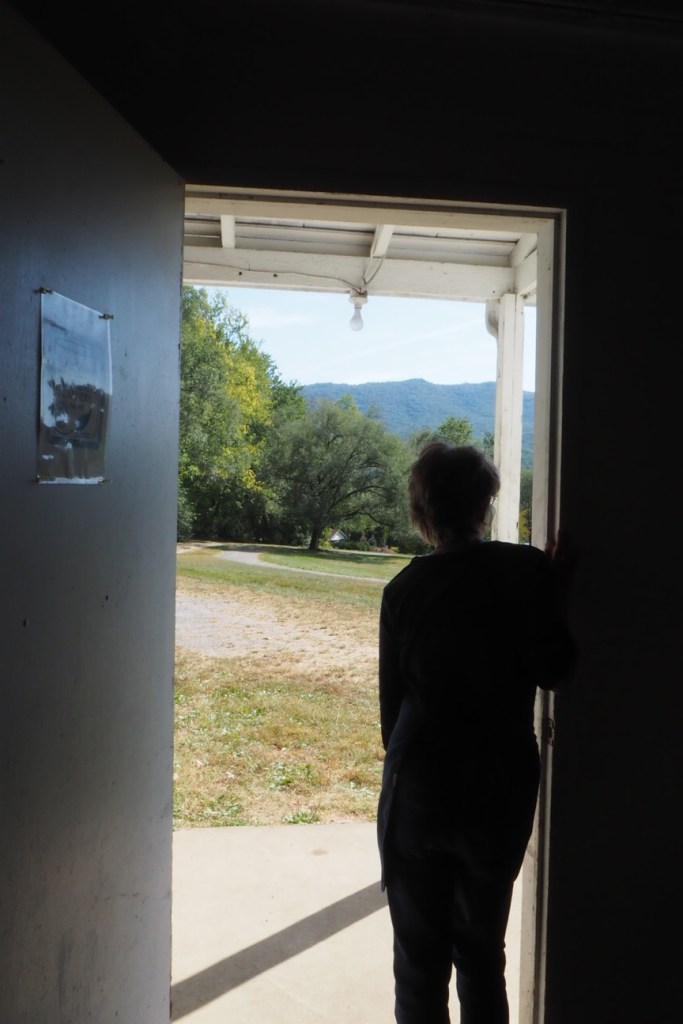
Open only five months of the year, first Monday in July to the second Friday in December. The middle, end, and canning portion of our gardening season. This cannery has provided a great service to it’s community over many years. Located in the quaint town of Keezletown, VA, in the shadows of the lovely Massanutten Mountain. It is a treasure I would hate to see go. In fact, I’d love to teach canning to our next generation in it! That would be grand!
Preparing the jars for packing. They must be hot, hot, and sterile. This steamer makes one fast job of this part of the process.The weight used to hold the door for steaming jars.The setting is beautiful. Set in the shadows of the Massanutten Moutains.The boiler room, where all the steam is generated.
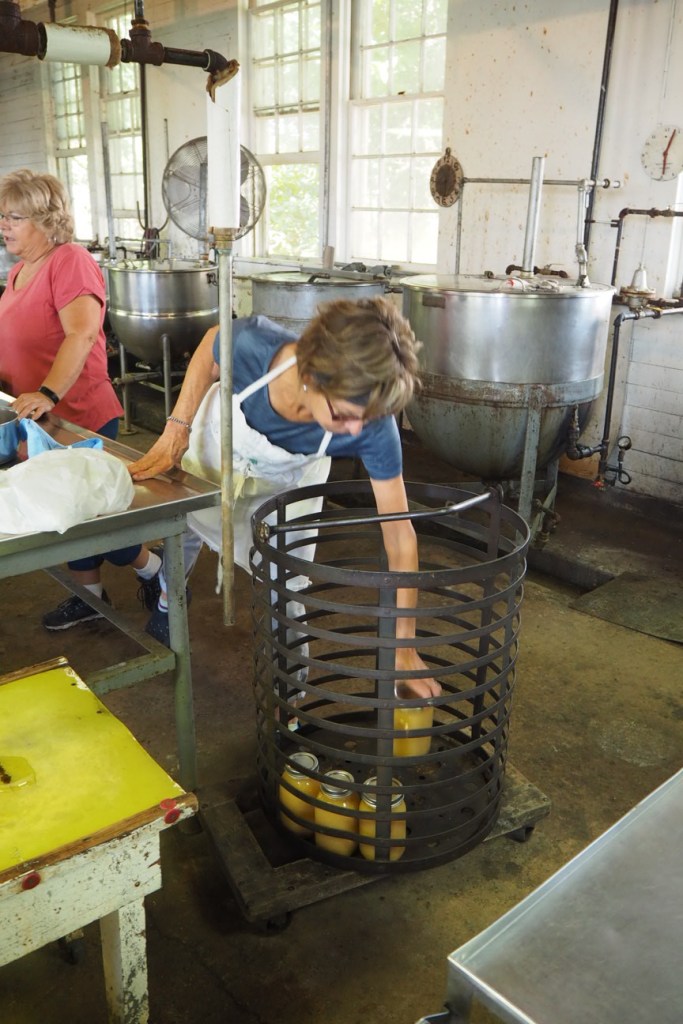
This huge basket held all our 53 quarts of sauce.
Sandra immersing the jars in pressure canner for cooking. She said these pressure canners came off ships!
There is always some fun down time for chatting and catching up with friends and community.
We share lunch together around the desk. Wonderful fellowship time.
Fifty-three delicious cans of home-canned applesauce all ready to take home .
Saying our good-byes to another great, productive day at the Keezletown cannery.
The Keezletown Cannery is a productive piece of community history in this area of Virginia. It has served it’s community members well over these many years, and still does to this day. To see it close would be a sure loss of vital history and active productivity for surrounding area folks, myself included. Growing, preserving, and being an active part of our food source is an important part of life that in these days and times should be of top interest to everyone who has to eat to live.
The cannery has served it’s community well over these many years, and still does to this day.