Ninja Fifi

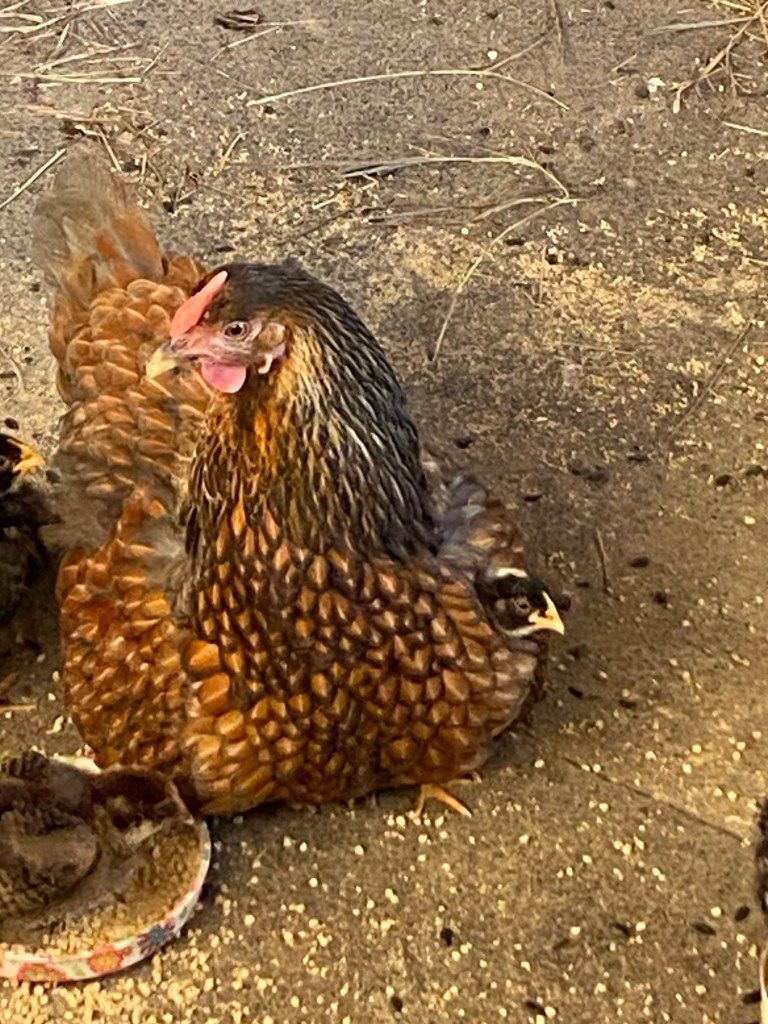
Fifi is our chicken momma. She hatched five little chicks six weeks ago. She has shown herself diligent, strong, and brave. She earned her ‘Ninja’ name last week, as named by my twinster.

When she got broody, I asked our neighbor for some fertile eggs. She made her nest in the rafters of the barn. Climbing a ladder daily was the only way to keep an eye on her. It did not end well for that clutch unfortunately. Sweltering summer heat proved too much, none made it.

Removing a broody hen who wants babies that are not going to hatch is sad. She kept sitting on the ground, not wanting to give up.

I decided to make a new nest in a box stall, get more eggs and try again. I have read where the eggs should be set before the hen, and if she wants them, she will move them under her. To my great joy and surprise, she put five eggs under her feathery, warm body in her newly made nest.

She is pushing the egg under her.

Had I been too hasty, I suddenly thought to myself? It takes a lot for a hen to hatch eggs. They sit for 21-25 days, getting off their nest once, maybe twice daily for food, water, and to relieve themselves. One round of hatching is hard enough. She is strong, young and determined, I reasoned. We both were going to succeed this time.
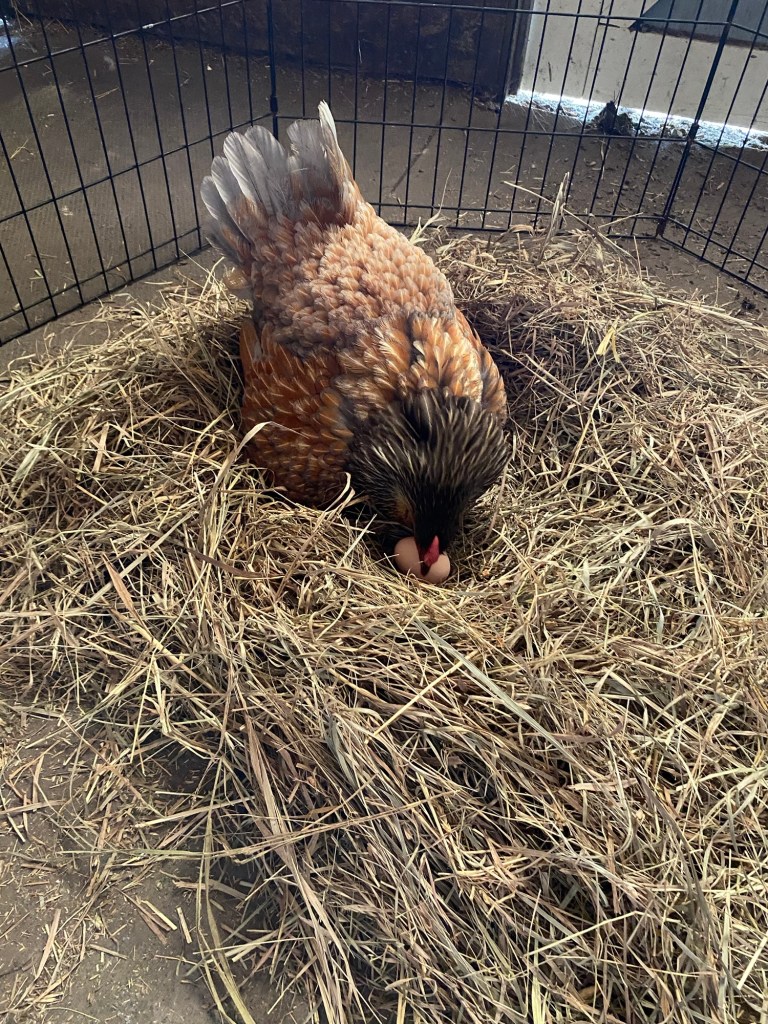
She put all five eggs under her!

To me it seems like magic. The chicks hatched! All five of them. The joy we have had watching them grow is terrific.
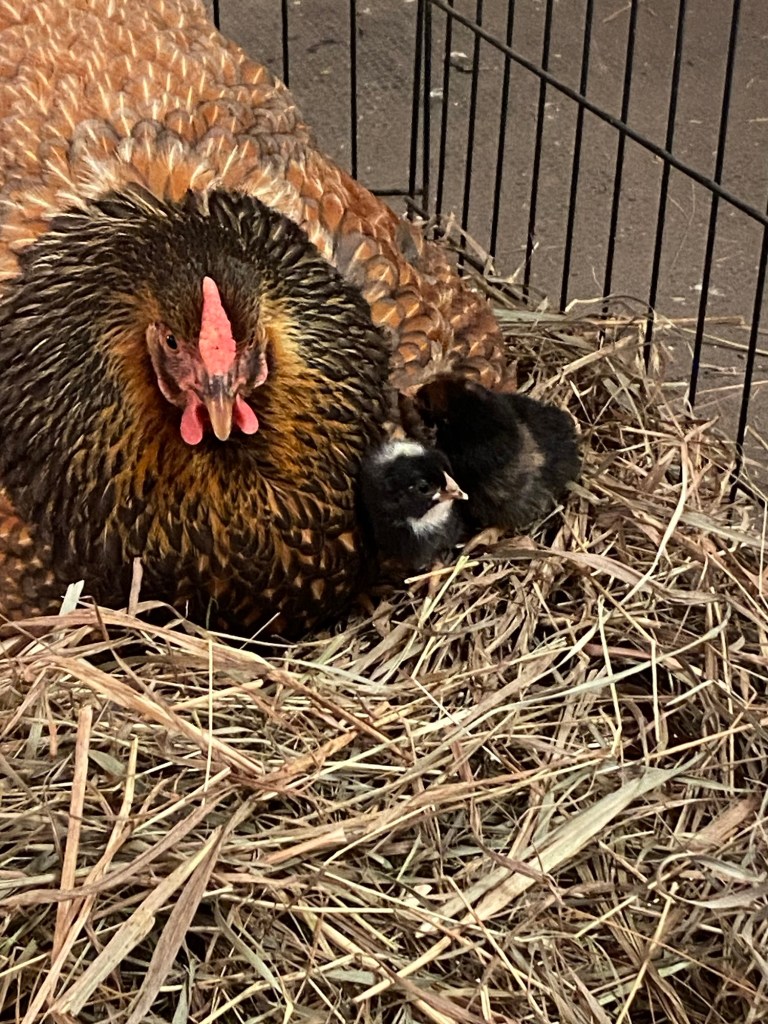
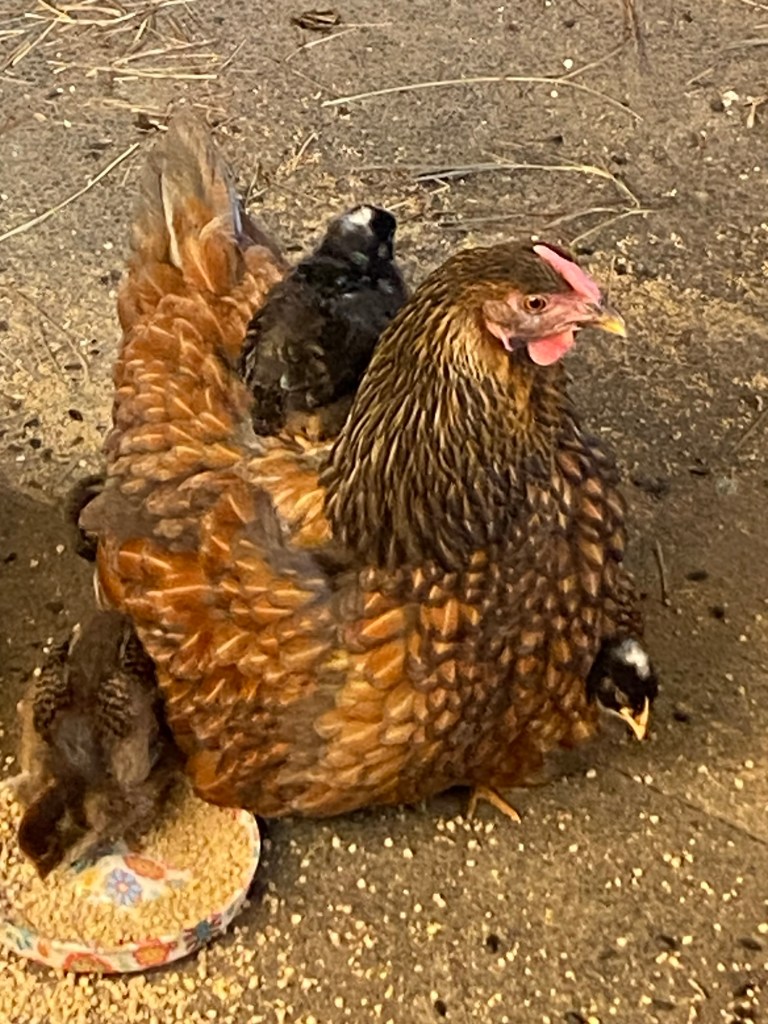
Adorable chicks.
How they hide under her is so cute!
How fast they grow! (Fifi is enjoying her first dirt bath since hatching them).

Our chickens free range. Occasionally we will loose one to fox. Last week was such a time. While feeding I noticed Fifi did not look ‘right’. Upon closer inspection I saw her wing was damaged, she’d lost a few feathers on her back and one foot was not quite right.

We put them in the barn where she could rest and get better. They were kept in the barn for several days and let out for short times under careful watch.

Apparently it was not worth engaging with a mother hen protecting her babies. Her healing has been amazing to watch. She took a beating protecting her chicks, but they are safe. Her bravery surely earned the ‘Ninja’ title.

She has recovered well. Her call to them ‘for food’ is unique, and do they ever come running!
A close eye is kept on them.
Watching this hen with her chicks has been fascinating.

How Can You do That?

“How can you do that?” I am frequently asked this question when people hear our chickens are free-range.

“It does pose a risk,” I concede, “but the benefits outweigh the risks.”

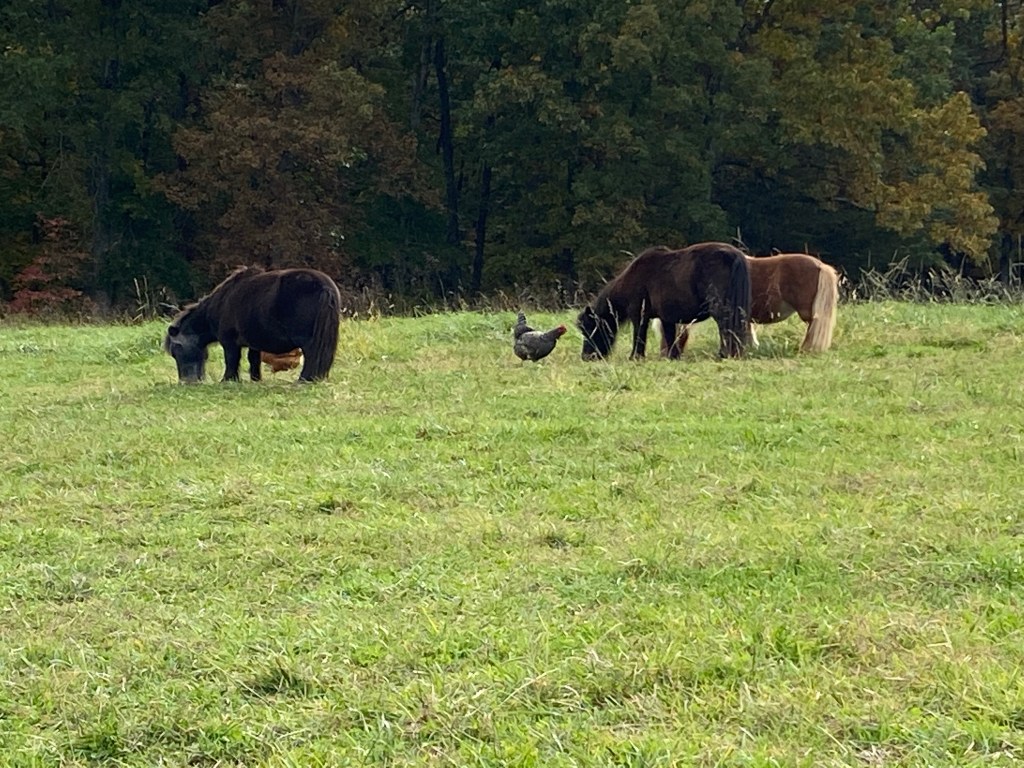
How can that be? How can free-range chickens ever survive? There are several factors that work in their favor out here at our place. We have dogs that keep wildlife at bay. We also walk all over the farm, thus leaving our human scent as well. The horses play a big part too in keeping critters away. Though they can injure and even kill chickens as I wrote in a previous post, Faster than You Think—Ask the Chickens. It does not happen often. A healthy horse will defend his domain if feel threatened, or a ‘stranger’ shows up on their turf.

Free-range chickens are a benefit to everyone. They eat bugs which makes us all happy. I leave horse manure several days in the paddock to ‘cure’ a bit. Chickens peck through it eating the worms, thereby breaking the parasite cycle for the horses. Bonus! They also are my first composers. Manure has been beautifully broken down by their work.

Their hen house is in a stall in the barn. This also offers extra protection for them, and a plus for us as eggs are laid either in their house or feed buckets. Rarely is there need to have a daily egg hunt.

While this works here, it may not work at your place. Which does not really matter. I have seen beautiful hen houses and enclosures to keep them safe, all full of a bunch of happy hens!

So please do not feel bad if your chickens cannot be free-range. I am just answering the question of how it works for us.

No matter how chickens are kept, would you agree that they are fun and #chickensmakeuschuckle ?

Happy chicken farming!

Our dogs help protect the farm.
Horses help protect chickens.
They eat worms in the manure that helps break parasite cycle for horses.
They are our first composters!
They eat bugs!
No matter where you keep your chickens, they are fun! #chickensmakeuschuckle